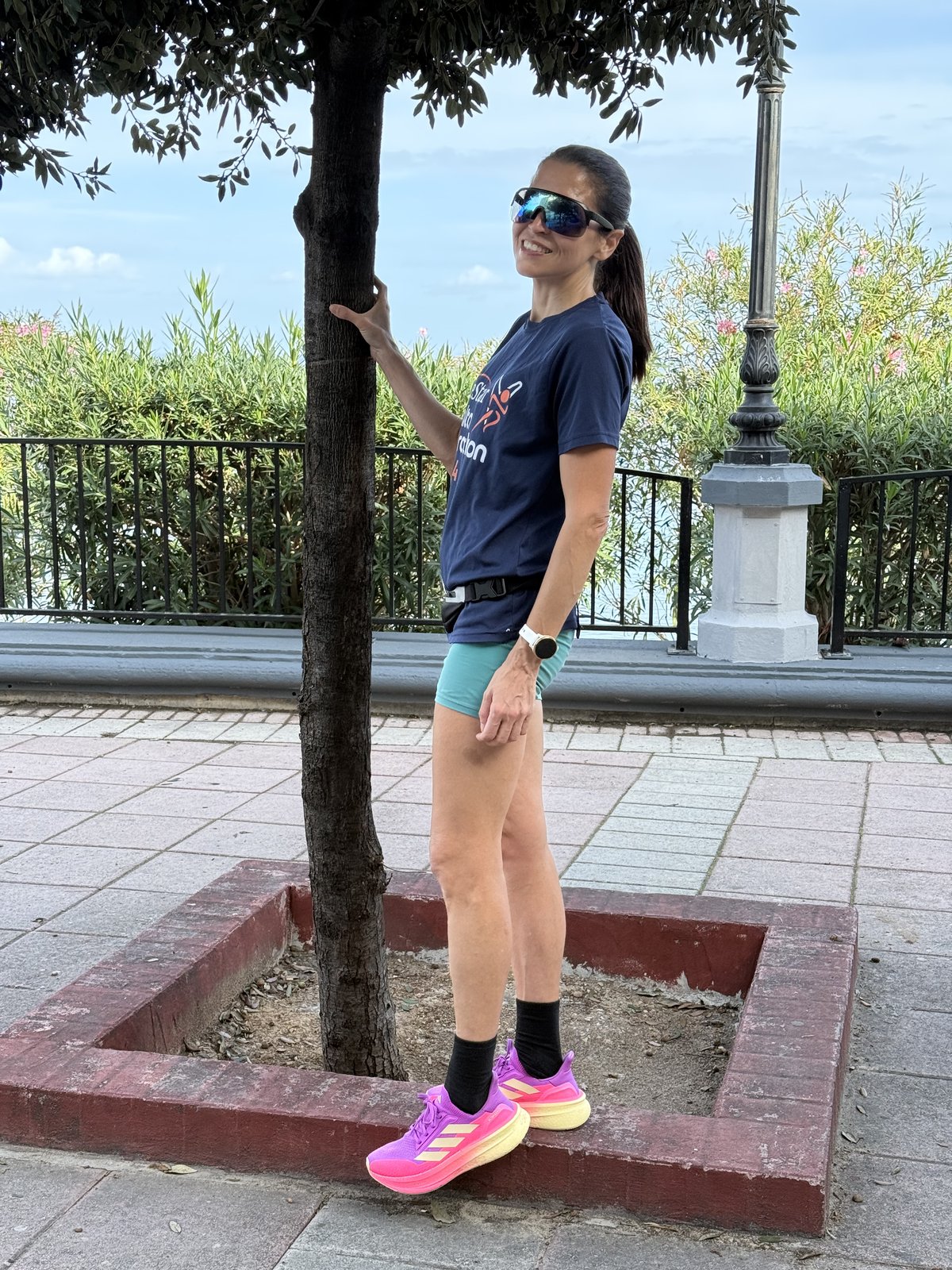
12 weeks. An AI coach. Zero excuses.
This is either going to be the smartest thing I've ever done for my running — or a very public lesson in what happens when a compliance professional over-engineers her training. Either way, you're watching it happen in real time.
Here's why I'm doing this, how it works, the full week-by-week plan, and what you can expect every week for the next three months.
The Half Marathon That Didn't Go to Plan
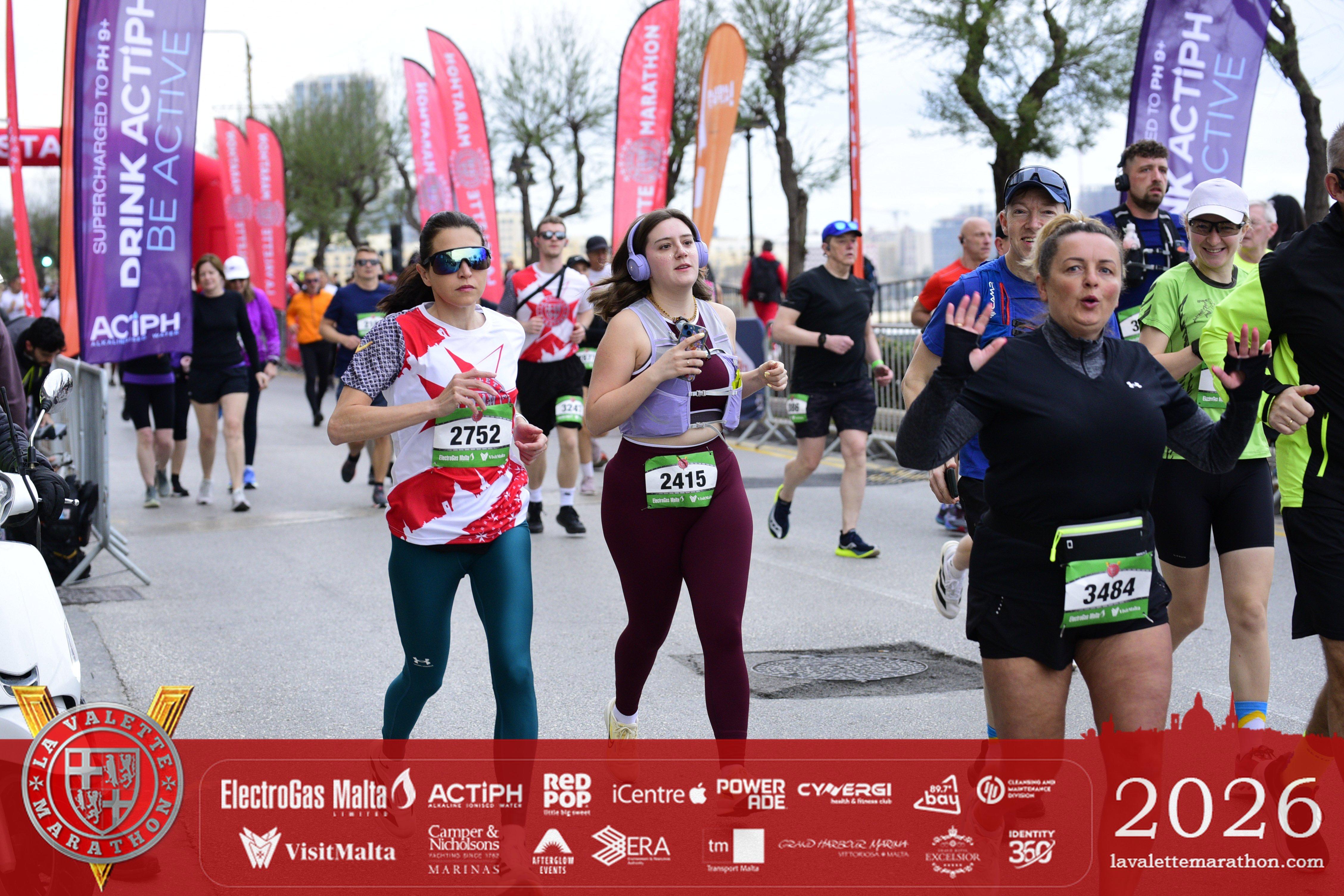
Let me be straight with you. My last half marathon wasn't a disaster — I finished in 1:54:46, the knee held, and for someone who wasn't sure she'd ever run distance again after the injury, that matters. But somewhere around kilometre 15, I knew.
The pacing was off from the start. The last four weeks of training I was guessing more than executing — skipping sessions, adding mileage on feel, adjusting things I shouldn't have touched. I didn't have a plan. I had a Garmin and good intentions.
That's not a training programme. That's hope dressed up as preparation.
I crossed the finish line at 5:22/km average knowing I had more in me. That feeling doesn't go away.
Why I'm Handing My Training to AI
A few weeks ago, @malewiczz posted a prompt framework on X that stopped me mid-scroll. It wasn't about running — but the core idea hit hard: stop using AI like a search engine. Use it like a system. Give it everything — your history, your constraints, your weak points — and let it build around you instead of giving you generic output.
I'm a compliance professional. Building systems, assessing risk, finding patterns — that's what I do every day for work. It hadn't occurred to me to apply that same thinking to my own body.
Basta. That changes now.
Starting this week, Claude is my coach. Not a generic 12-week plan copy-pasted from a running website. A properly built programme around my actual life: the knee history, the Malta heat, the full-time job across nine markets, the 6am trail runs before the sun gets serious, the weeks where everything falls apart and you get one session in instead of four.
Real constraints. Real plan. Real results — or real failure, documented honestly either way.
The Goal
Sub 1:48. That's a 5:07/km average pace for 21.1km. It means shaving nearly 7 minutes off my La Valette time. Aggressive? Yes. But I'm not interested in a "just finish" plan. I want to run a time that scares me a little.
To get there, I gave Claude everything: my 1:54:46 baseline, my 5:22 average pace, my 170 bpm average heart rate (too high — I was redlining from km 10), the knee history, the asthma, the Malta heat, the fact that I work full-time and can realistically do 4 runs per week with one day of cross-training.
Here's what came back.
The Full 12-Week Plan

The Structure
Every week follows the same rhythm: an easy run, a workout (intervals or tempo), a mid-week easy run, and a long run on the weekend. One cross-training day (swimming or cycling — low impact for the knee) and two full rest days. All paces are based on my current fitness, with built-in progression.
Pace zones based on my 1:54:46 HM baseline:
- Easy pace: 6:00–6:20/km (conversational, HR under 145)
- Tempo pace: 5:15–5:25/km (comfortably hard, HR 155–165)
- Interval pace: 4:50–5:05/km (hard but controlled, HR 165–175)
- Goal race pace: 5:07/km
- Long run pace: 5:45–6:10/km (building to race pace in later weeks)
Phase 1: Base Building (Weeks 1–4)
The foundation. No heroics. The goal is consistent mileage, getting the legs used to running four times a week without the knee flaring up. Heart rate discipline is everything here — if I can't hold a conversation, I'm going too fast.
Week 1 — 28km total
- Mon: Easy 6km @ 6:10–6:20/km
- Wed: 5km easy + 4×400m @ 5:00/km with 90s jog recovery
- Fri: Easy 5km @ 6:00–6:15/km
- Sun: Long run 12km @ 6:00–6:10/km
Week 2 — 31km total
- Mon: Easy 6km @ 6:05–6:15/km
- Wed: 5km easy + 5×400m @ 5:00/km with 90s jog recovery
- Fri: Easy 6km @ 6:00–6:10/km
- Sun: Long run 14km @ 5:55–6:10/km
Week 3 — 34km total
- Mon: Easy 7km @ 6:00–6:15/km
- Wed: 2km warm-up + 3×1km @ 5:10/km with 2min jog recovery + 1km cool-down
- Fri: Easy 6km @ 6:00–6:10/km
- Sun: Long run 15km @ 5:50–6:05/km
Week 4 (Recovery) — 26km total
- Mon: Easy 5km @ 6:10–6:20/km
- Wed: 2km warm-up + 4×400m @ 5:00/km with 90s jog + 1km cool-down
- Fri: Easy 5km @ 6:05–6:15/km
- Sun: Long run 10km @ 6:00–6:10/km (easy — this is a deload week)
Phase 2: Build (Weeks 5–8)
Now it gets real. Longer intervals, tempo runs introduced, long runs pushing toward 18km. This is where the aerobic engine gets built — and where most amateur plans fall apart because people skip the hard sessions when life gets busy. I won't. That's the deal.
Week 5 — 36km total
- Mon: Easy 7km @ 6:00–6:10/km
- Wed: 2km warm-up + 4×1km @ 5:05/km with 2min jog recovery + 1km cool-down
- Fri: Easy 6km + 4×100m strides
- Sun: Long run 16km @ 5:45–6:00/km
Week 6 — 39km total
- Mon: Easy 7km @ 5:55–6:10/km
- Wed: 2km warm-up + 20min tempo @ 5:20/km + 1km cool-down
- Fri: Easy 7km @ 6:00–6:10/km
- Sun: Long run 17km @ 5:45–5:55/km (last 3km at 5:20/km)
Week 7 — 42km total
- Mon: Easy 7km @ 5:55–6:05/km
- Wed: 2km warm-up + 5×1km @ 5:00/km with 90s jog recovery + 1km cool-down
- Fri: Easy 7km + 6×100m strides
- Sun: Long run 18km @ 5:40–5:55/km
Week 8 (Recovery) — 30km total
- Mon: Easy 6km @ 6:00–6:15/km
- Wed: 2km warm-up + 15min tempo @ 5:20/km + 1km cool-down
- Fri: Easy 5km @ 6:05–6:15/km
- Sun: Long run 12km @ 5:50–6:05/km
Phase 3: Race Specific (Weeks 9–11)
This is the sharpening phase. Long runs now include race-pace blocks. Intervals get faster. The body learns what 5:07/km feels like for extended periods — so on race day, it's not a surprise.
Week 9 — 44km total
- Mon: Easy 7km @ 5:55–6:05/km
- Wed: 2km warm-up + 3×2km @ 5:07/km with 2min jog recovery + 1km cool-down
- Fri: Easy 7km + 6×100m strides
- Sun: Long run 19km @ 5:40–5:50/km (last 5km at 5:10/km)
Week 10 — 46km total (peak week)
- Mon: Easy 7km @ 5:50–6:00/km
- Wed: 2km warm-up + 25min tempo @ 5:15/km + 1km cool-down
- Fri: Easy 7km @ 5:55–6:05/km
- Sun: Long run 20km @ 5:40–5:50/km (last 5km at 5:07/km — rehearsing the finish)
Week 11 — 40km total
- Mon: Easy 7km @ 5:55–6:05/km
- Wed: 2km warm-up + 4×1.5km @ 5:05/km with 90s jog recovery + 1km cool-down
- Fri: Easy 6km + 4×100m strides
- Sun: Long run 16km @ 5:35–5:50/km (last 4km at race pace)
Phase 4: Taper (Week 12)
The hardest week mentally. Less volume, maintained intensity. The fitness is banked — now it's about arriving at the start line fresh, sharp, and ready to execute.
Week 12 — 24km total
- Mon: Easy 5km @ 5:55–6:10/km
- Wed: 2km warm-up + 3×1km @ 5:05/km with 2min jog recovery + 1km cool-down
- Thu: Easy 4km @ 6:00–6:10/km + 4×100m strides
- Sat: Race day. Sub 1:48. Let's go.
What I'm Actually Testing
The real question isn't whether AI can write a running plan. It can. Any decent AI can spit out a 12-week programme in thirty seconds.
The question is whether AI can coach — whether it can take real, messy, human input and produce something that actually makes me better. Whether the feedback loop works. Every week, I feed back the actual data: what I ran, how the knee felt, what my heart rate did, how I slept, whether I hit the paces. Claude adjusts the next week based on reality, not the original plan.
That's the experiment. Structured adaptation, not a static PDF.
If it works, I'll tell you exactly how to replicate it. If it doesn't, I'll tell you that too — and why. No success-story-only content. The experiment is the content.
The Challenge: 12 Weeks, Documented Weekly
Every single week for the next 12 weeks, I'll publish a training log here on followtheflor.com. No skipping weeks because it was bad. No glossing over the sessions that didn't happen.
Each week you'll get:
What Claude prescribed — the exact plan, the reasoning behind it, the load and pacing targets.
What I actually did — which is not always the same thing, and I'll tell you why when it isn't.
The numbers — pace, distance, heart rate, how the knee felt, sleep, energy. The full picture.
What we adjusted — because a good training plan isn't static. We'll iterate every week based on the data.
My honest take — whether this is working, what's surprising me, and what I'd do differently.
This isn't a sponsored post. Claude isn't paying me to run. This is a genuine experiment — I'm the subject, you're following the study.
Credit Where It's Due
This challenge exists because of @malewiczz and the framework he shared on X. The way he thinks about AI as a structured system — not a chatbot, not a search engine, but an actual working tool — changed how I approached this. Go find his thread. It's worth your time.
The coaching itself is Claude by Anthropic. Week one brief has already been submitted: full injury history, current fitness baseline, terrain, heat constraints, availability. The plan above is what came back. Now we execute.
Week One Drops This Week
The plan is set. The training starts now.
Follow along here every week. Ask questions in the comments — especially if you're thinking about doing something similar. And if you've already tried AI coaching for running or any other sport, I really want to hear how it went.
The grind continues. Just with better systems this time.
Are you in?
Credit: the AI-as-system concept that sparked this challenge came from @malewiczz on X. Nothing here is sponsored. All data is real. All results — good or bad — get published.