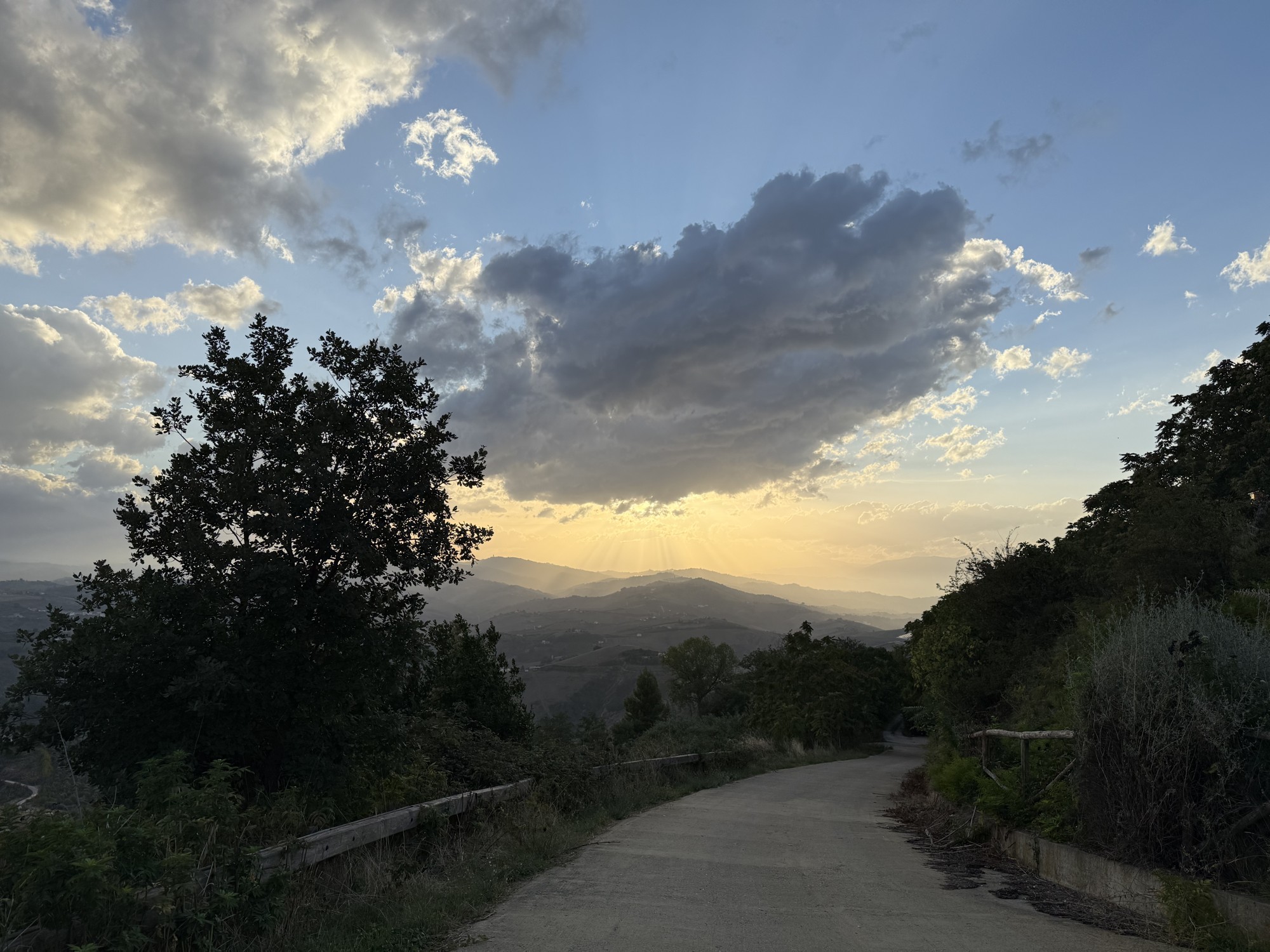
 Forget the Amalfi crowds. This is Abruzzo — and you've probably never heard of it.
Two hours east of Rome, there's a region where wolves still patrol the treeline, fortresses sit at 1,460 metres, gorges swallow rivers whole, and the water is so clear you can count the trout from your kayak. Welcome to wild Abruzzo — the Italy that even most Italians forget exists.
I drove this route over five days with nothing but a rental car, a pair of trail shoes, and zero reservations. What I found was the most adventurous, underrated corner of Europe I've ever set foot in. This is the full route — every stop mapped, folklore included, no filler. Dai, let's go.
The Route: Mountains to Gorges in 5 Days
Here's the path. You can do it in any order, but this route flows naturally from the high mountains down through the gorges, lakes, and villages. Every stop connects to the next within 30–60 minutes of driving.
Day 1: Campo Imperatore → Rocca Calascio → Santo Stefano di Sessanio Day 2: Scanno village → Lago di Scanno Day 3: Villalago → Sagittario Gorge → Lago di Barrea Day 4: Tirino River kayaking → Fara San Martino gorge Day 5: Flex day — revisit favourites or head to the coast
You need a car. No debate. Buses exist in theory but not in practice. The mountain roads are narrow, winding, and absolutely stunning — half the trip is the drive itself.
Day 1: The Fortress at the Top of the World
Campo Imperatore
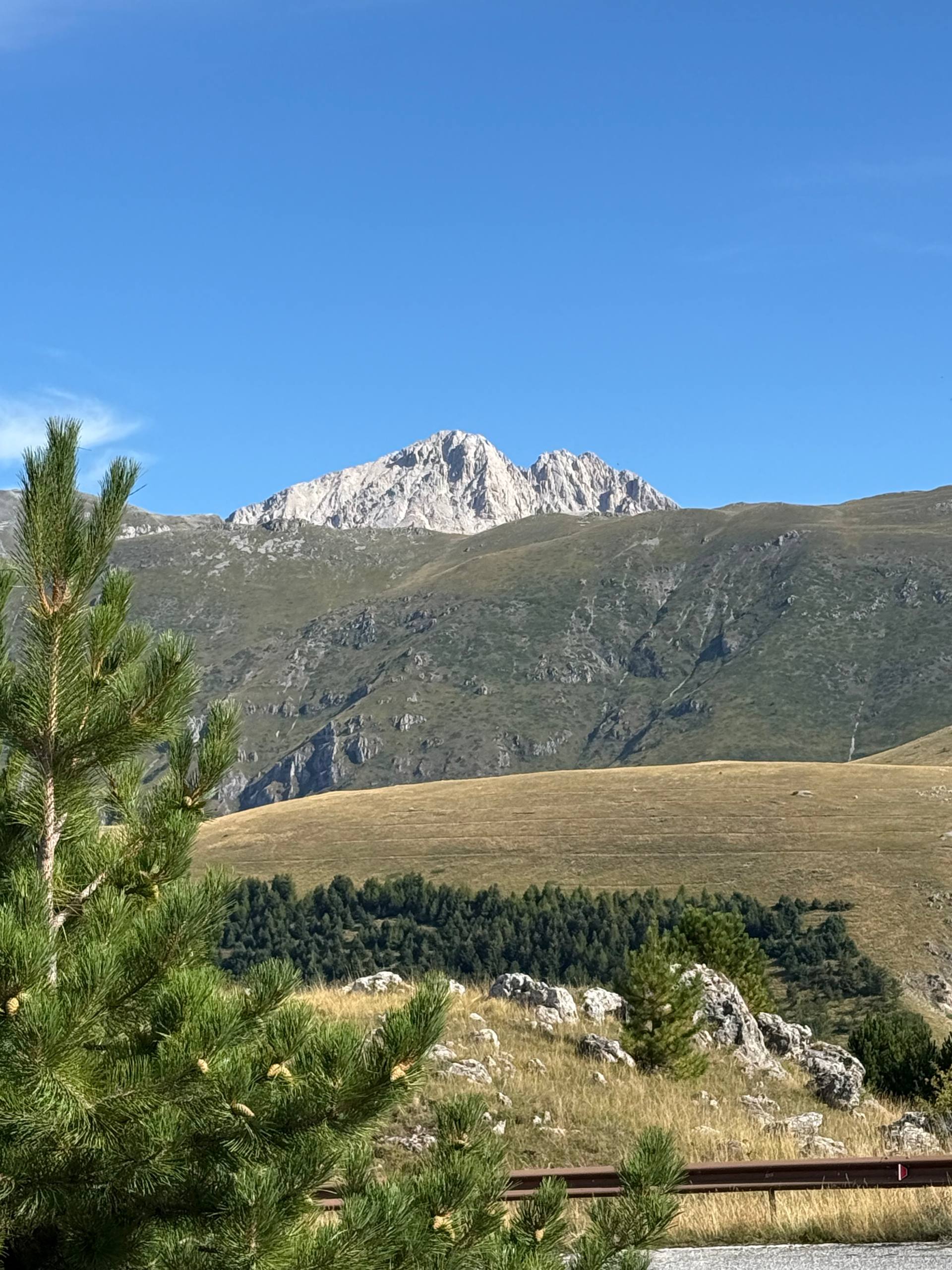 Campo Imperatore. They call it "Little Tibet" — and standing here, you understand why.
Start high. Campo Imperatore is a vast highland plateau at 1,800 metres, sitting beneath the Gran Sasso — the highest peak in the Apennines. The landscape is otherworldly: rolling golden grassland, wild horses, and a silence so complete your ears ring. Mussolini was imprisoned in the hotel here in 1943 before being rescued by German paratroopers in one of WWII's most dramatic raids. The hotel still stands, slightly surreal against all that emptiness.
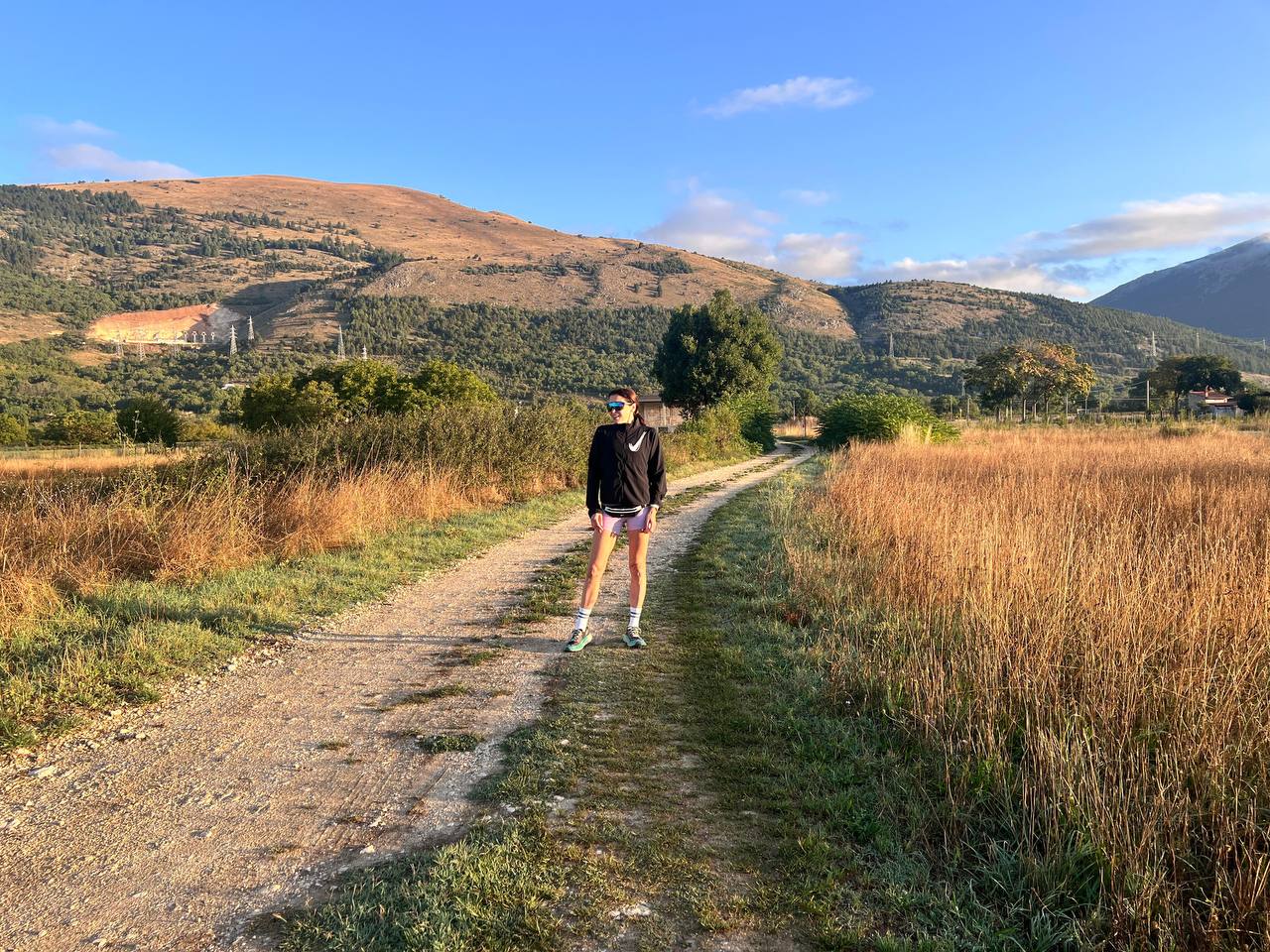 The plateau stretches for kilometres. You can walk for an hour and not see another person.
Rocca Calascio
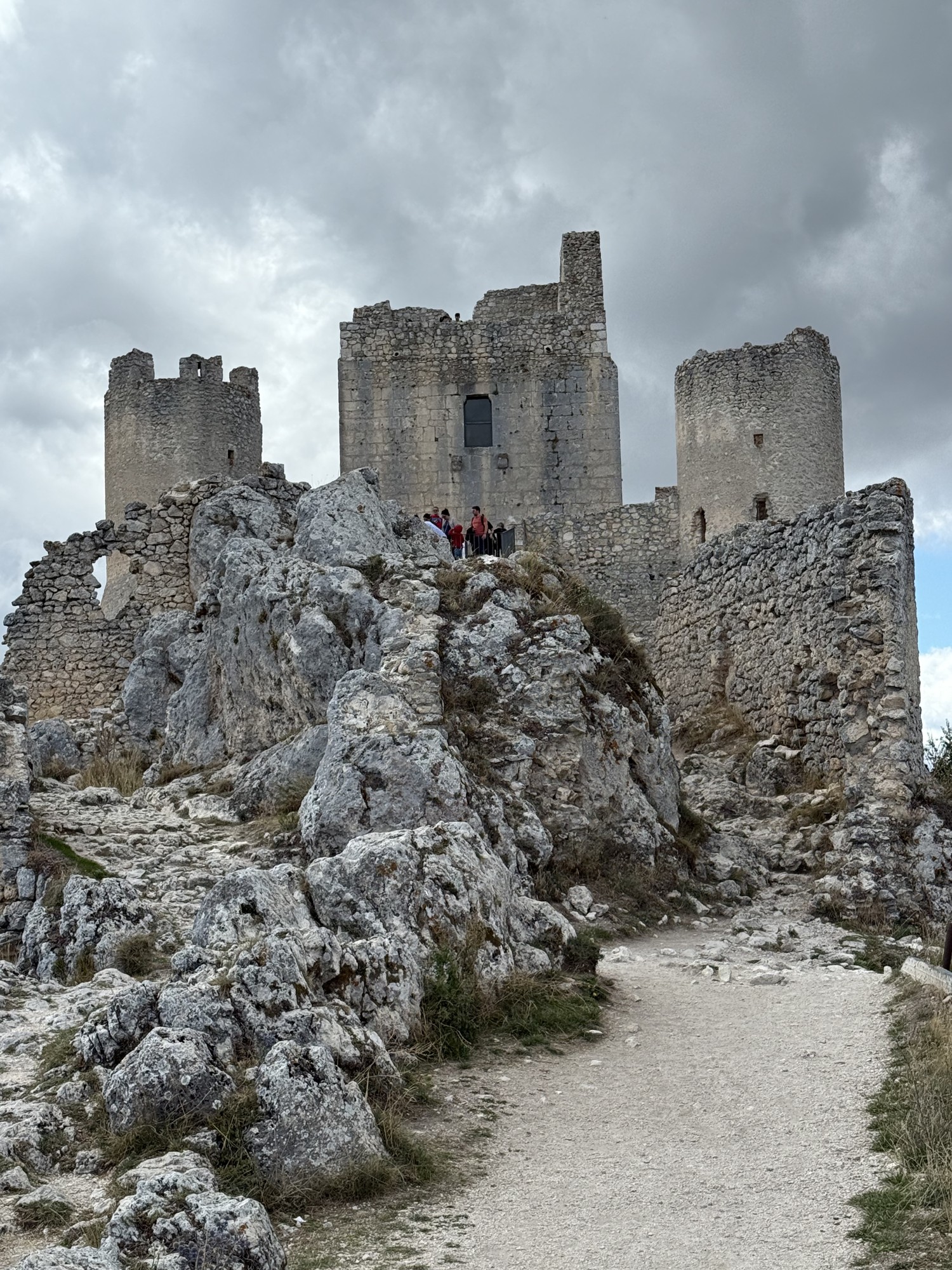 The first time you see Rocca Calascio, you understand why they filmed Ladyhawke here.
From Campo Imperatore, drive down to Rocca Calascio — the highest fortress in the Apennines at 1,460 metres. This 10th-century ruin sits on a bare hilltop with 360-degree views across the Gran Sasso massif. Ladyhawke and The Name of the Rose were filmed here. You'll understand why the moment you arrive.
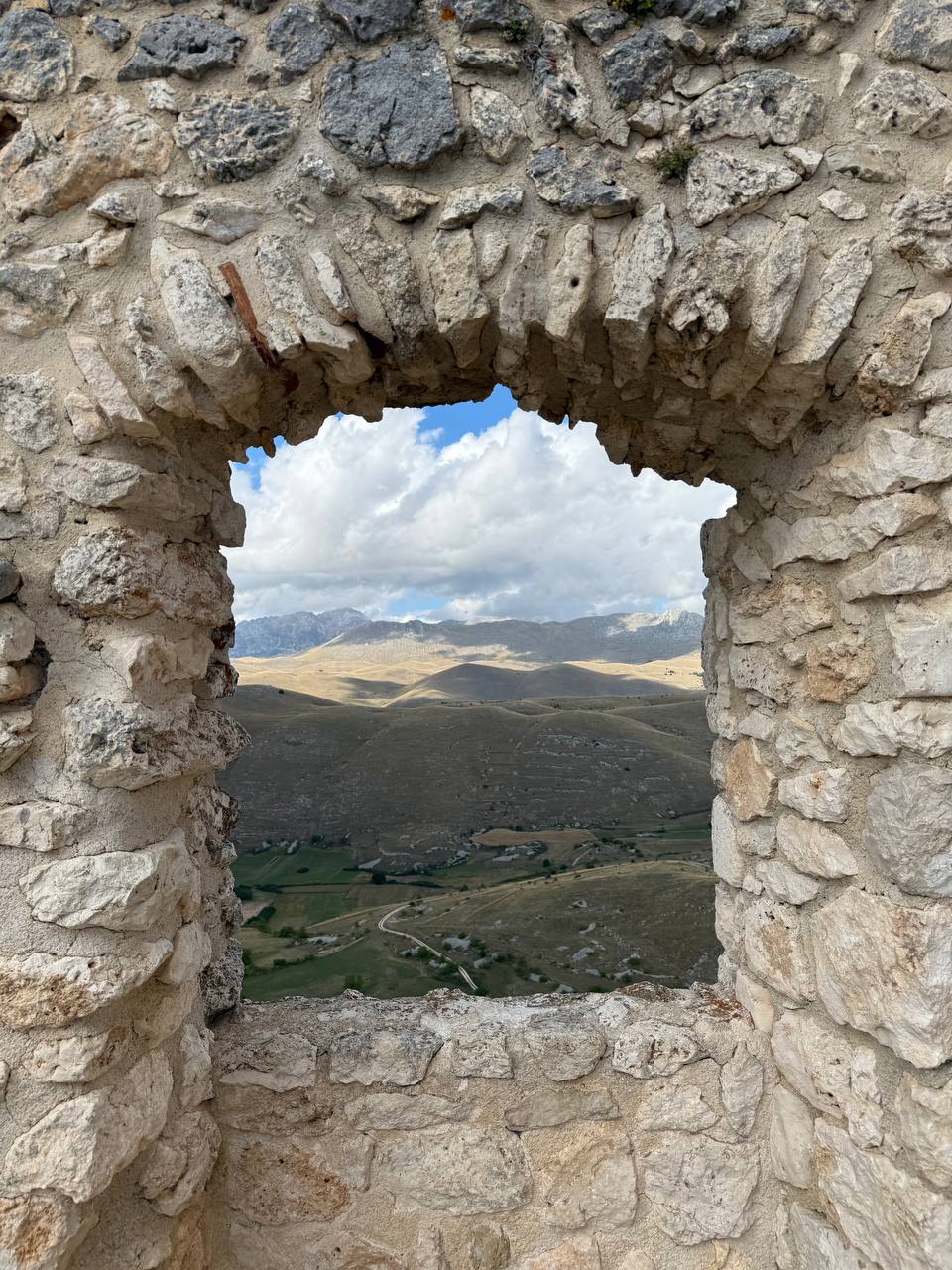 Every window in the ruins frames a different mountain range. I could have stayed for hours.
The folklore: Local legend says the fortress was never conquered — not by armies, not by time. When Norman knights built the original watchtower, they chose this peak because shepherds reported seeing strange lights guiding lost flocks home at night. The mountain, they believed, was already protecting something.
Park in Calascio village and walk up — about 30 minutes, steep but paved. Free entry, open daily until sunset.
Santo Stefano di Sessanio
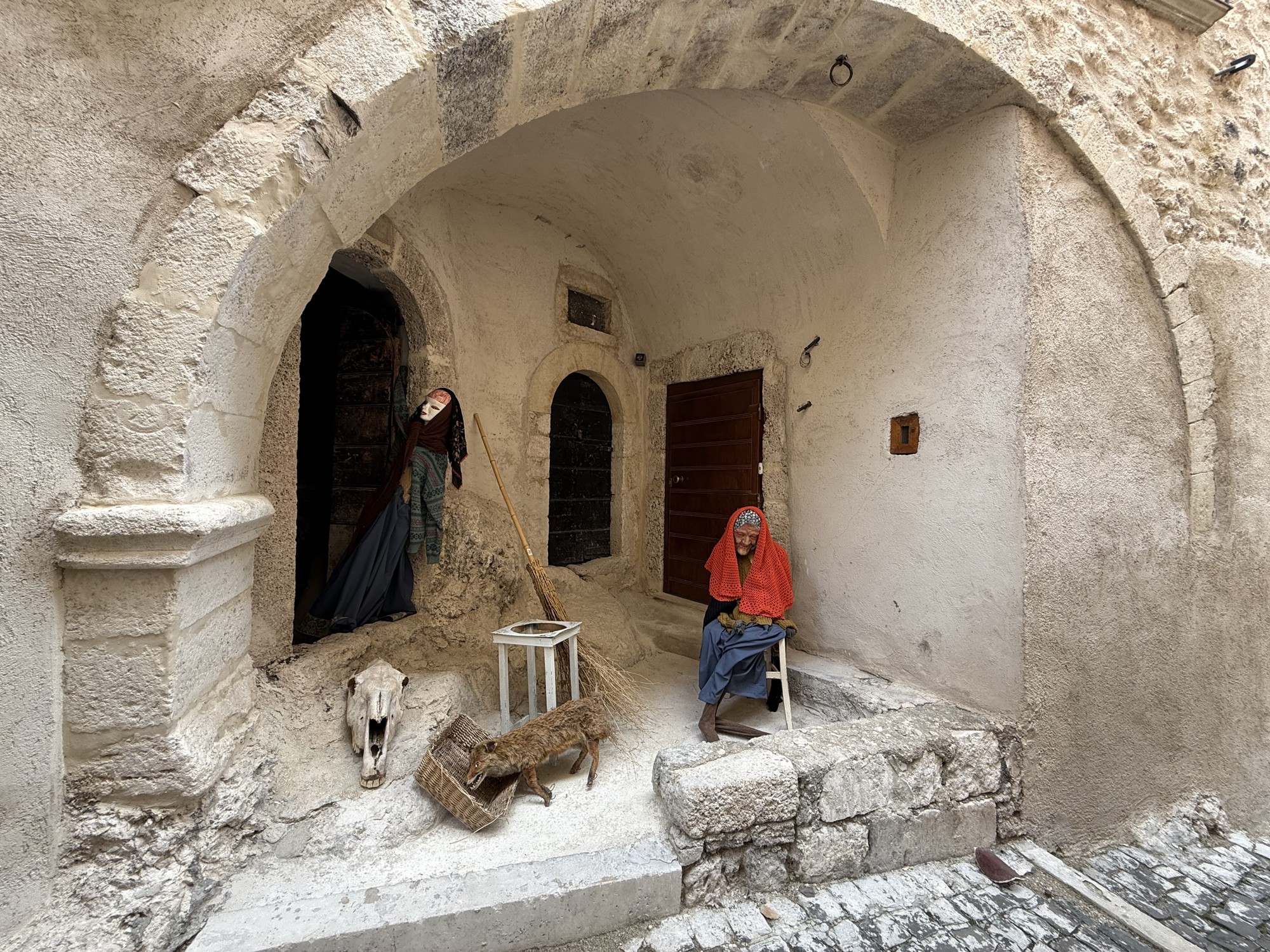 Scenes like this are tucked into archways throughout the village — daily life from centuries past, preserved in paint and stone.
Five minutes from Rocca Calascio sits Santo Stefano di Sessanio — one of Italy's most perfectly preserved medieval borghi. Fewer than 100 permanent residents. Stone arches, sheep murals on the buildings, heart-shaped flower garlands hanging over doorways, and old women sitting on steps like they've been there since the Medici ruled the place. This was a wool-trading powerhouse in the 15th century. Now it's frozen in amber.
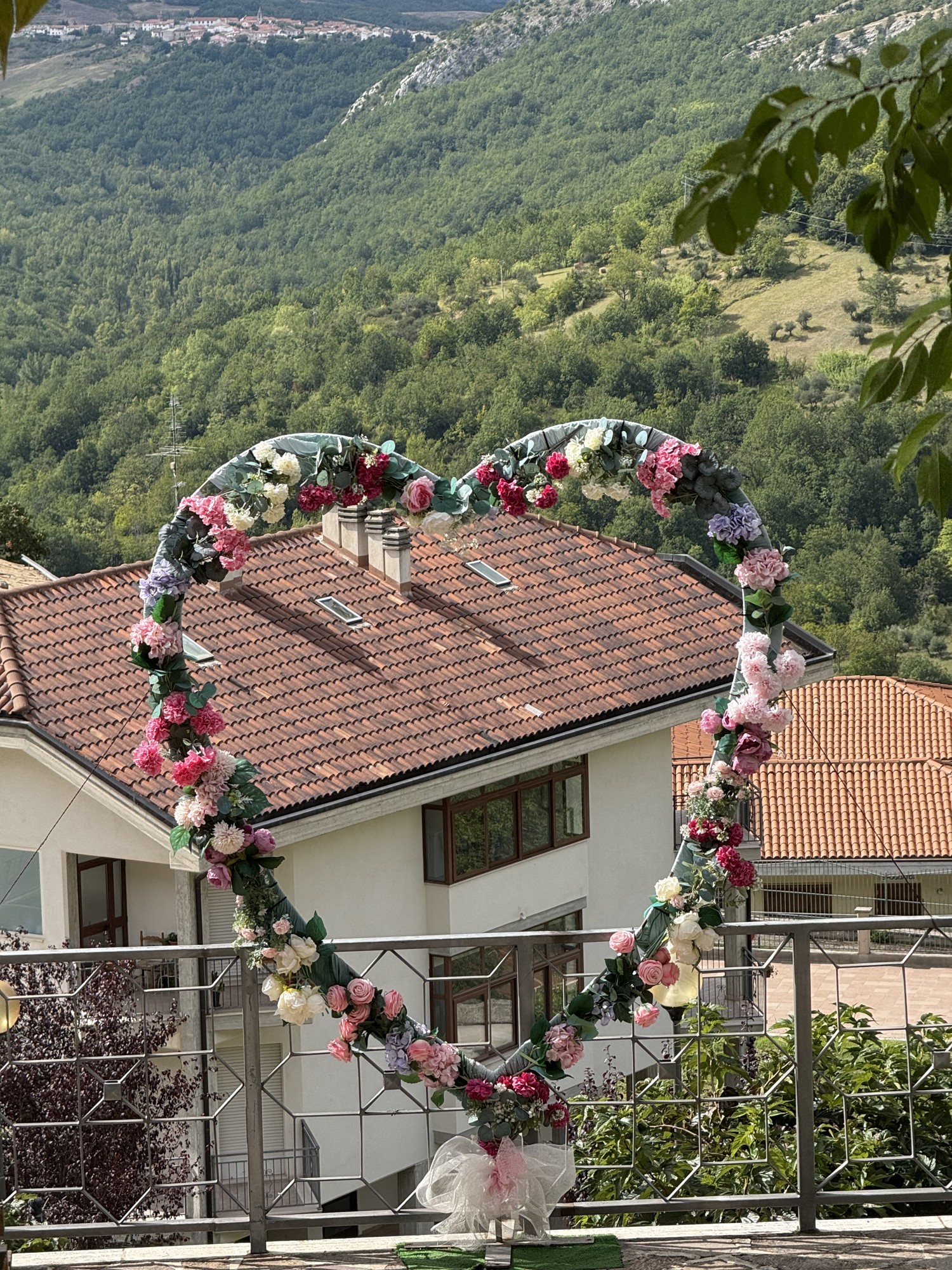 The heart-shaped flower arches are everywhere. This village knows what it's doing.
Visit early morning or late afternoon. Midday is dead silent — everyone's eating, as they should be.
Day 2: Scanno — The Village on the Rock
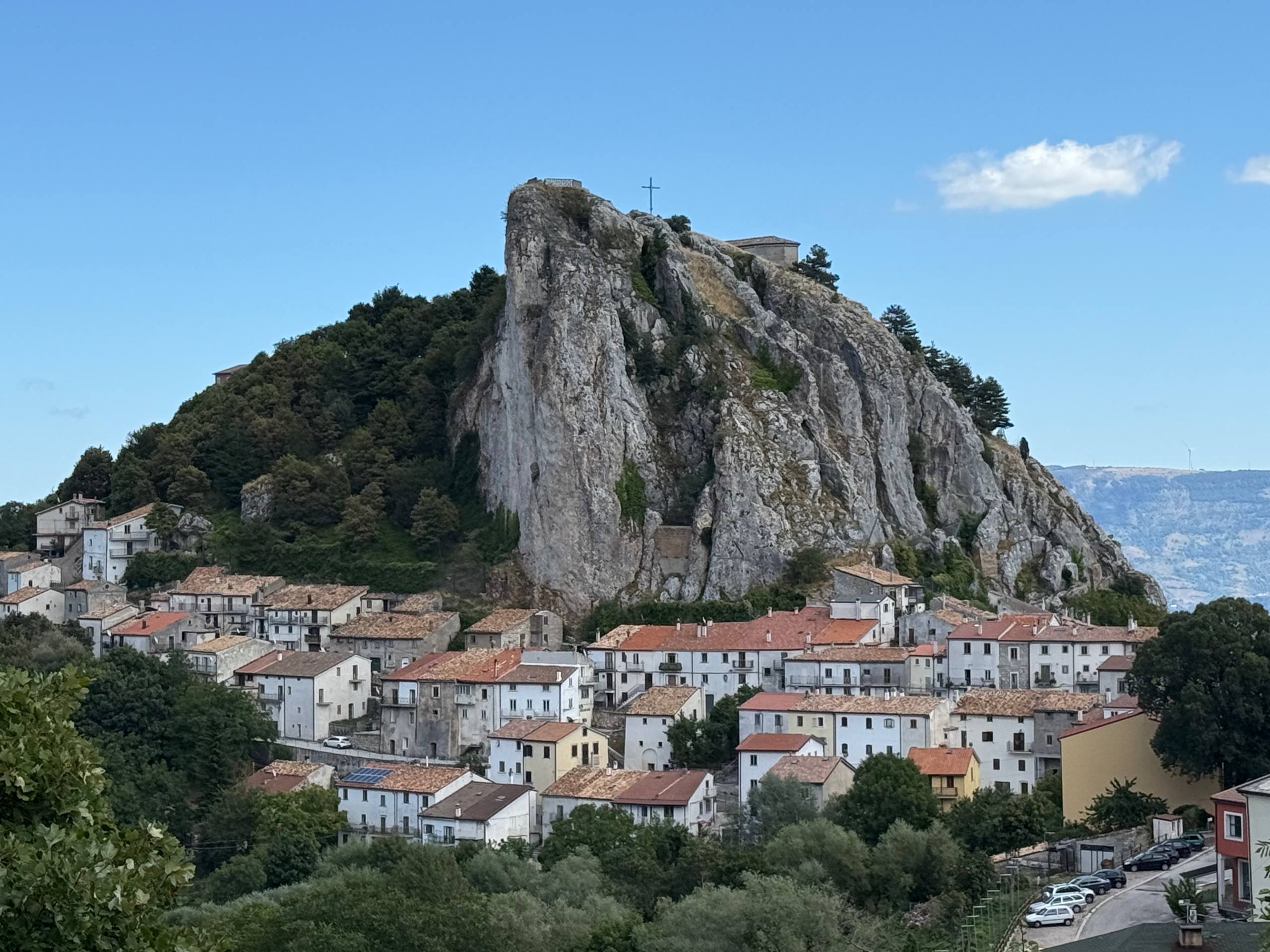 Scanno looks like it was dropped onto the rock by something that wanted it found but never reached.
Scanno is the kind of place that makes you pull the car over and just stare. The village clings to a massive rock outcrop, terracotta rooftops stacked like tiles, a church perched at the summit. It's been continuously inhabited since before the Romans, and walking the narrow stone streets you can feel every century.
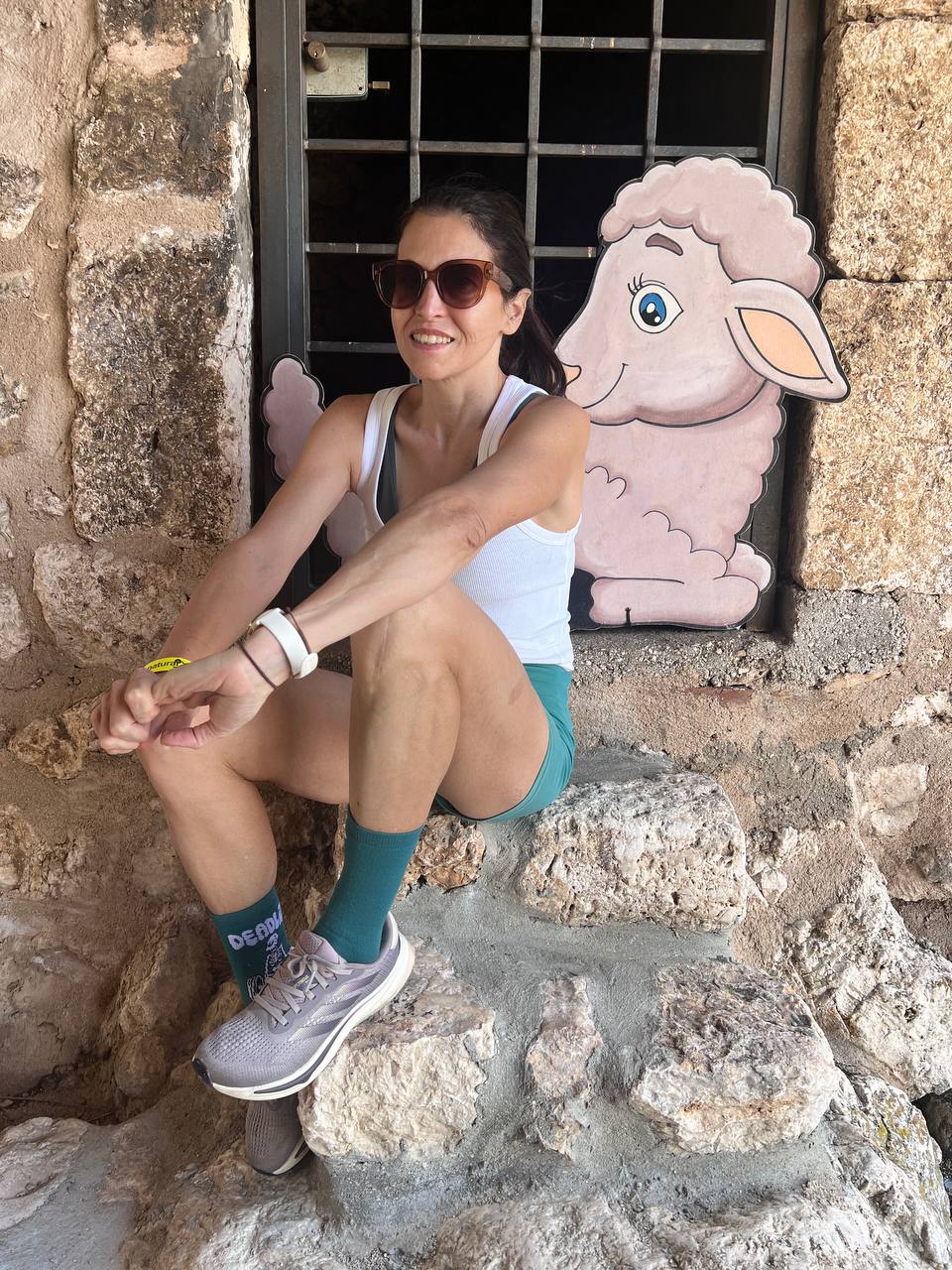 The villages have character. So do the locals — even the wooden ones.
The folklore: Scanno's women were famous for their distinctive costume — a layered, dark outfit with an ornate headdress that historians believe has Ottoman origins. The story goes that during a Turkish raid centuries ago, the women of Scanno hid in the mountains and survived by adopting elements of their captors' dress as camouflage. The costume survived long after the threat disappeared.
Below the village, Lago di Scanno is heart-shaped when seen from above — a fact that Italian couples have been exploiting for proposals for decades. But even without the romance angle, the turquoise water against the surrounding mountains is genuinely stunning.
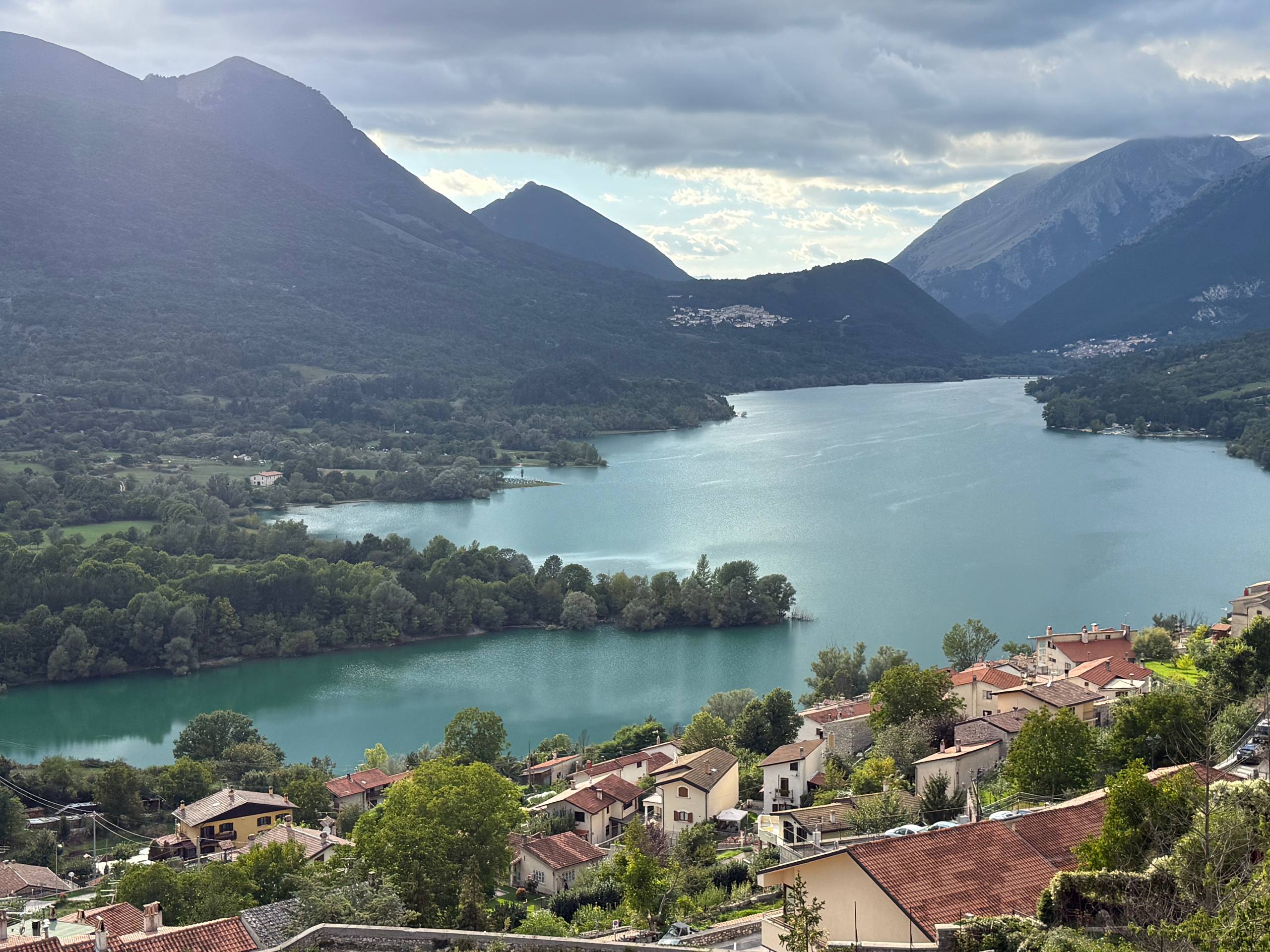 The lake from above. The water colour isn't a filter — it's glacial.
Day 3: Bear Country — Villalago and the Sagittario Gorge
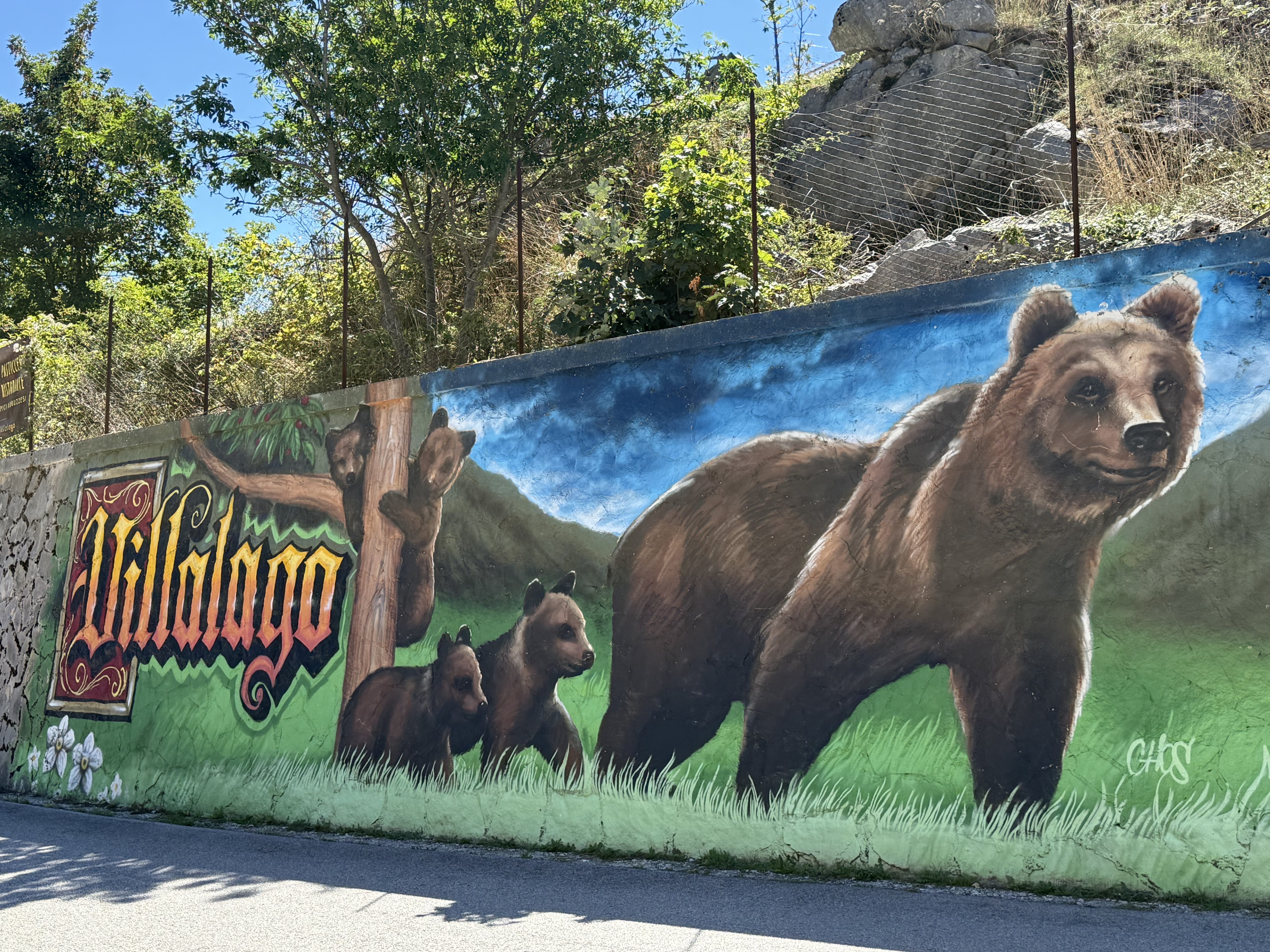 You know you've arrived in bear country when the welcome sign has teeth.
This is where Abruzzo gets properly wild. The Abruzzo, Lazio and Molise National Park is home to around 60 critically endangered Marsican brown bears and a healthy population of Apennine wolves. You probably won't see either — but knowing they're out there changes how the forest feels.
The Sagittario Gorge
A 6km loop from Villalago descends through oak forest to Lago di San Domenico, crosses to the Eremo di San Domenico hermitage, then climbs back. The gorge itself is dramatic — sheer limestone walls plunging into impossibly blue water.
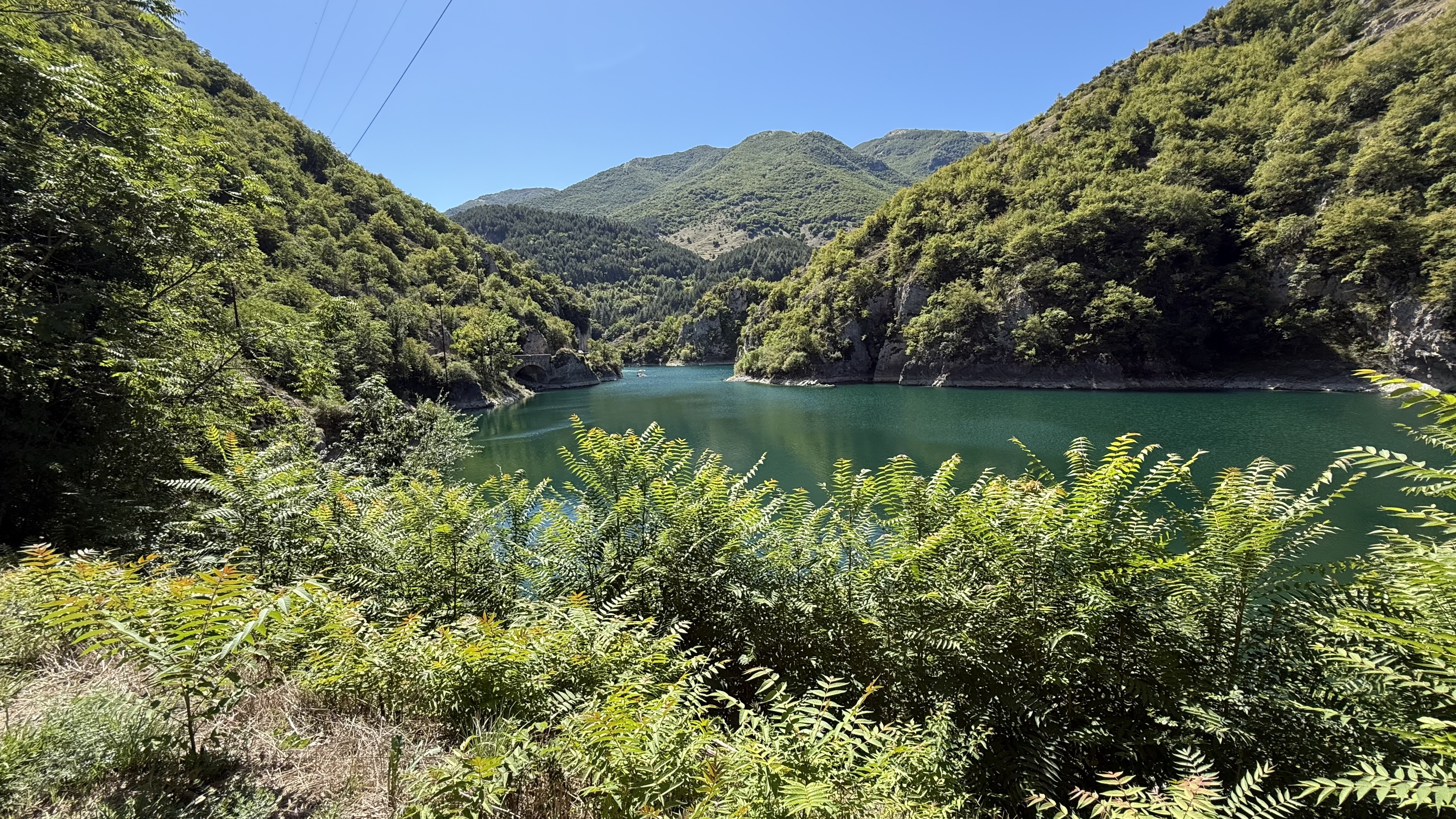 Lago di San Domenico. The hermitage sits at the base of those cliffs, carved into the rock.
The folklore (and it's a dark one): Inside the hermitage portico, faded paintings depict four miracles attributed to San Domenico: a child returned by a wolf, a greedy man's fish transformed into serpents, a boy saved after falling from an oak, and the miracle of the fava beans. Every August, a votive procession winds down through the gorge to the hermitage — candles flickering against the canyon walls. Pilgrims still touch the stone and wash their hands in the cave water, asking for healing.
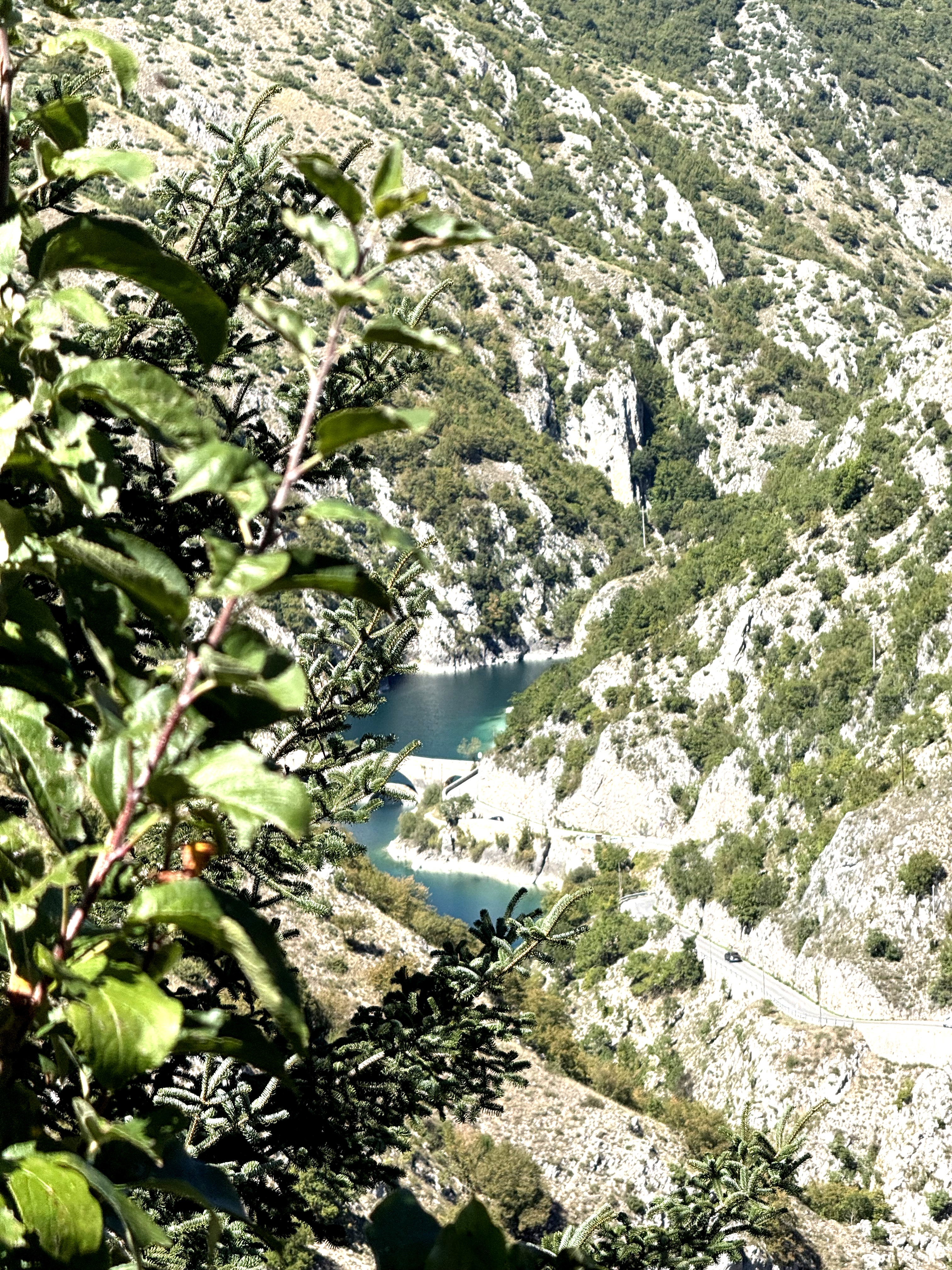 Looking down into the gorge from the trail. The scale is hard to capture in a photo.
Lago di Barrea
After the gorge, drive 20 minutes to Lago di Barrea — turquoise water framed by mountains that drop straight into the lake. The village of Barrea perches above it like a balcony. Hike the beech woods above the lake and you'll see trail markers carved with wolf and bear silhouettes. In the meadows, wild crocuses push through the grass in spring — violet petals like tiny rebellions.
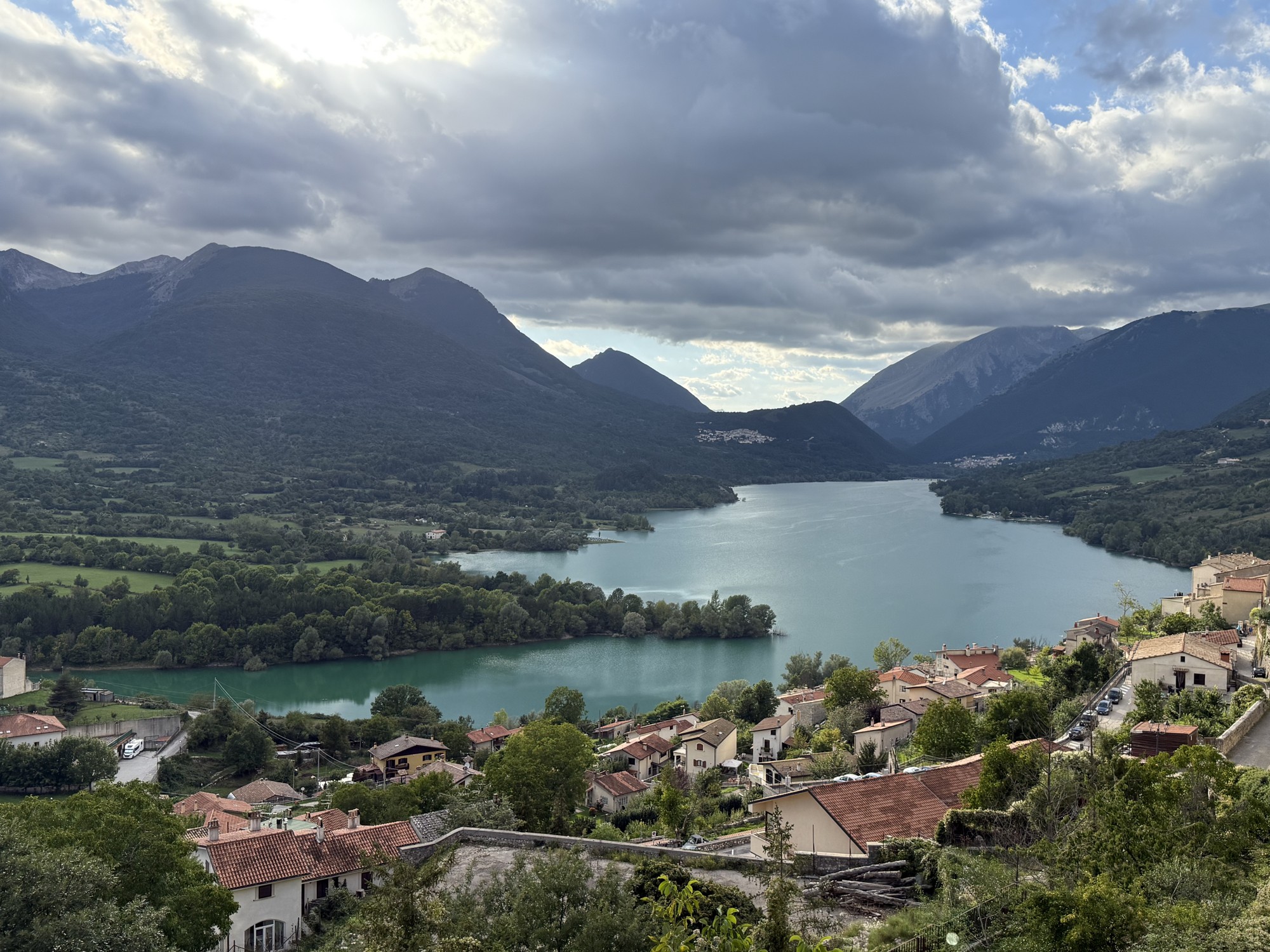 Lago di Barrea from the village. Bears and wolves live in the forests around this lake.
Day 4: Kayak the Tirino, Then Hike a Gorge
The Tirino River — Europe's Clearest Water
This is the day that surprised me most.
The Tirino is considered the clearest river in Europe, fed by underground springs pushing 6,000 litres per second through a valley lined with ancient willows and poplars. The water is so transparent you watch trout and crayfish pass underneath your kayak. It's surreal — like paddling through glass.
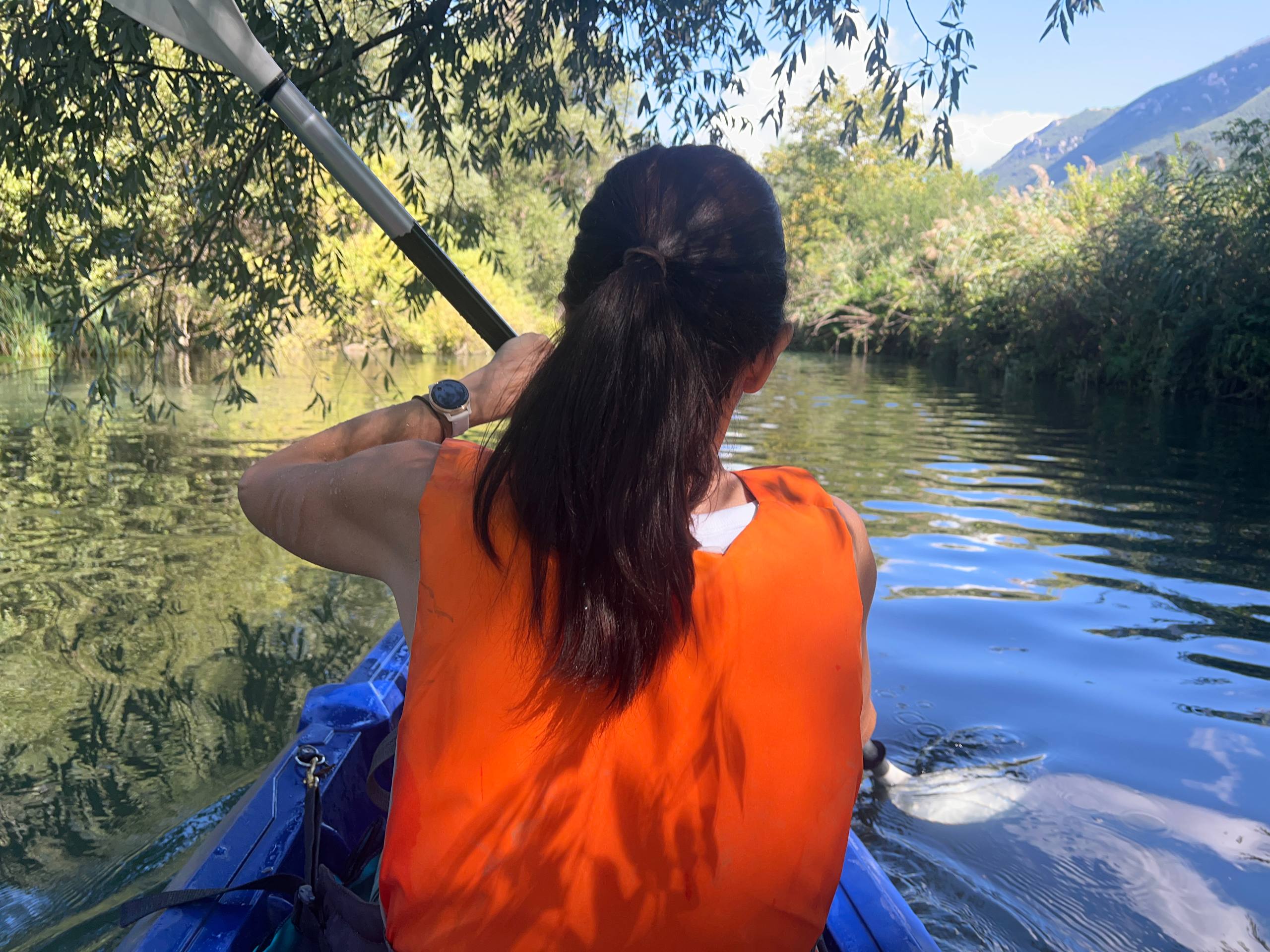 Kayaking the Tirino. The water is so clear you can see every stone on the riverbed. This was the highlight of the entire trip.
Rent a kayak through Il Bosso or Abruzzo Wild — around EUR 25, no experience needed. The paddle downstream takes about 2 hours, completely flat water, suitable for beginners. But don't let "easy" fool you — the scenery is world-class. Herons take off from the reeds as you pass. Kingfishers flash blue between the willows. And the mountains rise on both sides like a painting someone forgot to tell the tourists about.
Pro tip: Go early morning. The light on the water is magical, and you'll have the river to yourself.
Fara San Martino Gorge
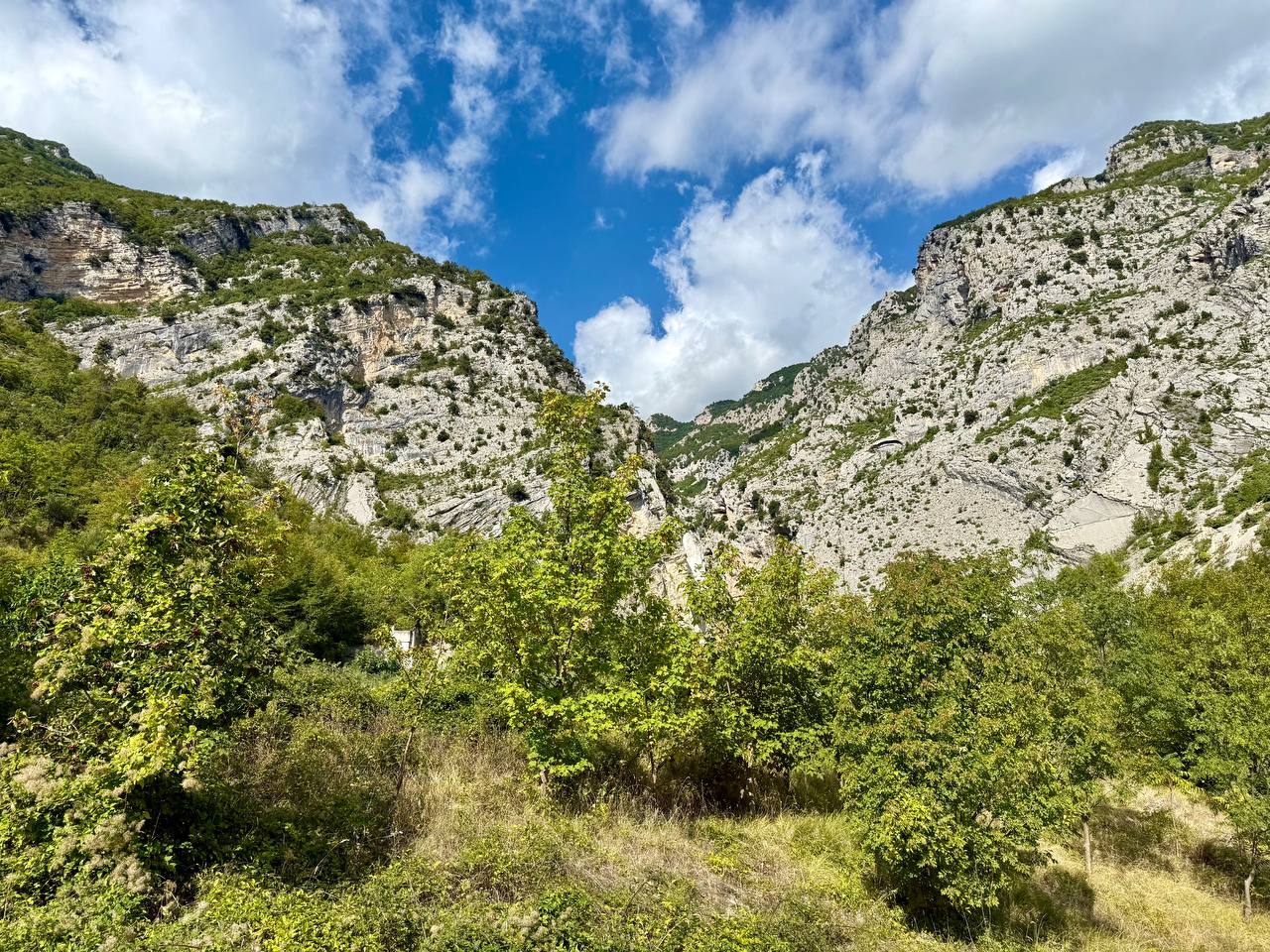 The entrance to the Fara San Martino gorge. The walls are 200 metres high and close enough to touch on both sides.
After the river, drive to Fara San Martino — a small town wedged between the Majella mountains. The gorge here is extraordinary: a narrow crack in the limestone where the walls rise 200 metres on each side, close enough to touch simultaneously in places. Follow the trail through the gorge to the ruins of the Abbey of San Martino in Valle, built by Benedictine monks in the 9th century and abandoned when the mountain literally crushed it.
The folklore: Fara San Martino is also the birthplace of Italy's pasta industry — De Cecco started here in 1886, using the pure spring water from the gorge. The water is still considered some of the best in Italy for pasta-making. So when you eat De Cecco at home, you're eating Abruzzo gorge water.
Day 5: Your Call
Use this day to revisit whatever grabbed you most, or head toward the Adriatic coast — the Trabocchi Coast is 90 minutes east, and it's a completely different Abruzzo (I wrote a separate piece on it).
How to Plan Your Route
Base yourself in: Sulmona (central, good restaurants, train station) or a rural agriturismo for the full experience.
Days needed: Minimum 4–5 to hit all stops properly. Rushing this route defeats the point.
Best time: Late May–June or September–October. August is crowded (by Abruzzo standards, which means you might see 20 other tourists).
Getting around: Car. Non-negotiable. The mountain roads are narrow but stunning — half the trip is the drive.
Budget: Abruzzo is absurdly cheap compared to Tuscany or the Amalfi Coast. Expect EUR 60–80 per night for a good agriturismo, EUR 15–25 for a full meal with wine, EUR 25 for the kayak rental.
Don't forget: Arrosticini — tiny lamb skewers grilled over coals, eaten by the dozen with your hands. They're everywhere. They're perfect.
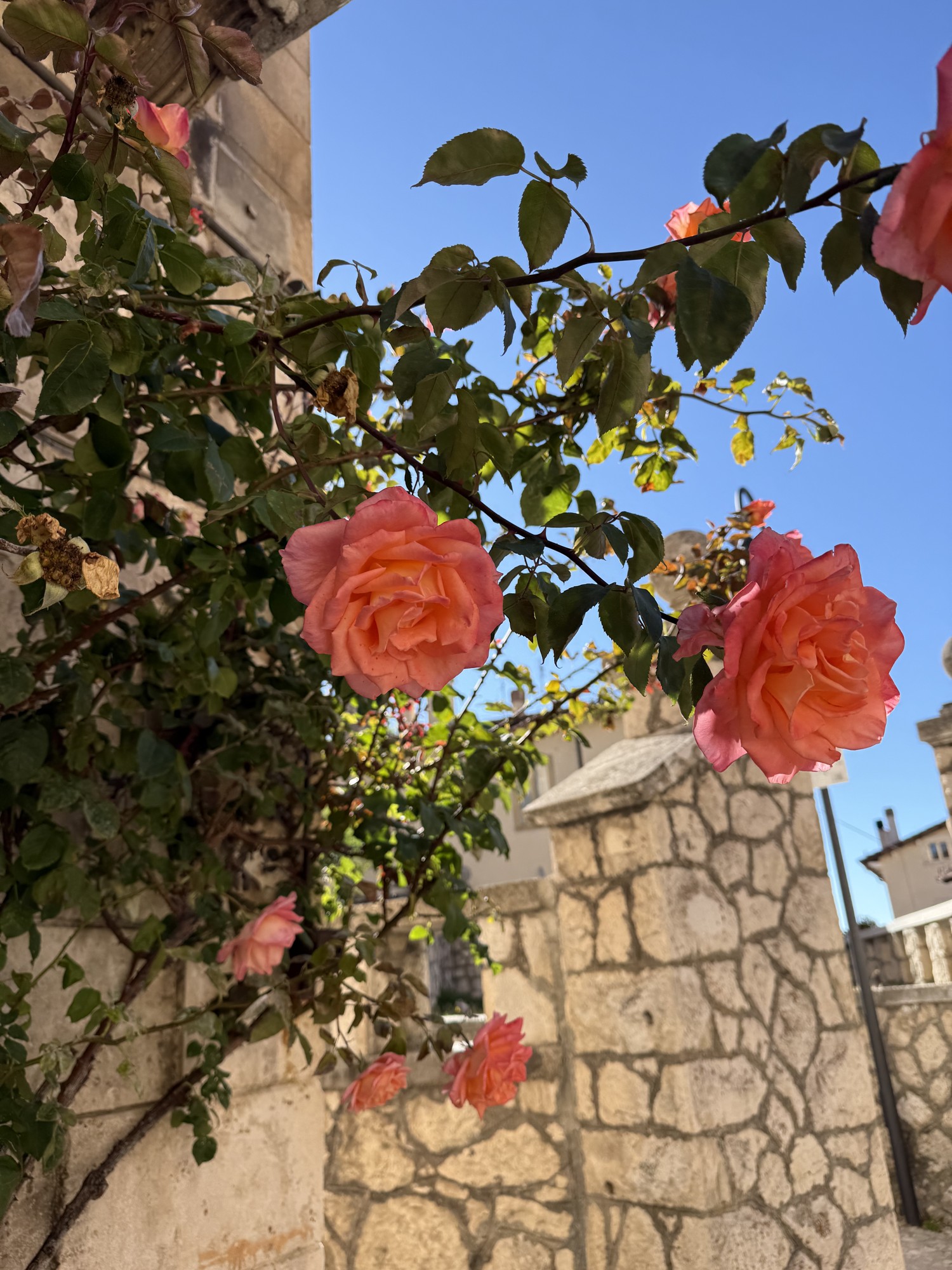 Abruzzo is in the details. Roses growing from 600-year-old stone.
Wild Abruzzo surprised me in ways the famous parts of Italy never have. The mountains are wilder, the stories are darker, the food is simpler and better, and the crowds simply don't exist. If you've done Tuscany and the Amalfi Coast and you're wondering what's left — this is what's left. And it's better.
Have you been? I want to hear your stories — drop me a message.