One hour, fifty-four minutes, and forty-six seconds. That's not the time I trained for. That's not the time I visualised on every long run. That's the time my body gave me on a morning when everything I'd been carrying for months finally showed up on the clock.
The La Valette Half Marathon 2026 was supposed to be my redemption race. Instead, it was a lesson.
The Build-Up That Wasn't
Let me rewind. Three months before race day, I had a plan. A proper plan — structured intervals, long runs along the Sliema seafront, tempo work in Dingli. I was in decent shape. And then the Sahara decided to visit Malta.
If you've never experienced a Sahara dust storm on this island, imagine breathing through a damp cloth that someone dipped in sand. The air turns yellow, your chest tightens, and if you've got asthma — like me — you're done. Not "take it easy" done. Couch done. Inhaler-on-the-nightstand, can't-walk-upstairs done.
Two weeks. Two full weeks of zero running while my lungs remembered how to function. And when I finally laced up again, I could feel the gap. The legs were there but the engine was broken.
That wasn't all. I'd just started a new job — the kind that eats your brain from 7 a.m. to 7 p.m. and leaves you too wired to sleep and too exhausted to cook properly. So I didn't. Diet went out the window. Pasta at 10 p.m., skipped meals, coffee as a food group. Basta.
Oh, and a dental implant. Because apparently my body decided that race prep was the perfect time to need oral surgery. Try doing hill repeats when your jaw is throbbing and you're on antibiotics. Spoiler: you don't.
Race Morning

March 22nd. 7:06 a.m. Eleven degrees, overcast, light wind. Perfect running weather for someone who trained. Dangerous weather for someone who showed up on stubbornness alone.
The gun went off from Sliema and I felt good for the first five kilometres. Too good, probably. The route hugs the coastline — Valletta's fortifications on one side, open sea on the other — and it's beautiful enough to distract you from the fact that this course has teeth.
Because nobody warned me about the hills.
The official elevation says 132 metres of gain. My watch laughed and logged almost 400. The course rolls constantly — short punchy climbs through the Three Cities, a brutal drag up past Vittoriosa, and just when you think it's done, another rise. For someone who trained flat along the promenade, those hills were a reckoning.
The Wall
By kilometre fourteen, I knew. The pace that was supposed to be 4:50 had drifted to 5:20 and was still climbing. My heart rate sat at 170 and wouldn't come down. My legs felt heavy in a way that had nothing to do with fitness and everything to do with weeks of missed training, poor nutrition, and a body that had been fighting on too many fronts.
I wanted to be angry. I was angry — at the dust storm, at the new job eating my life, at myself for not eating properly, at my stupid jaw. But somewhere around kilometre seventeen, the anger ran out. And what was left was just... running. Slow, stubborn, unglamorous running.
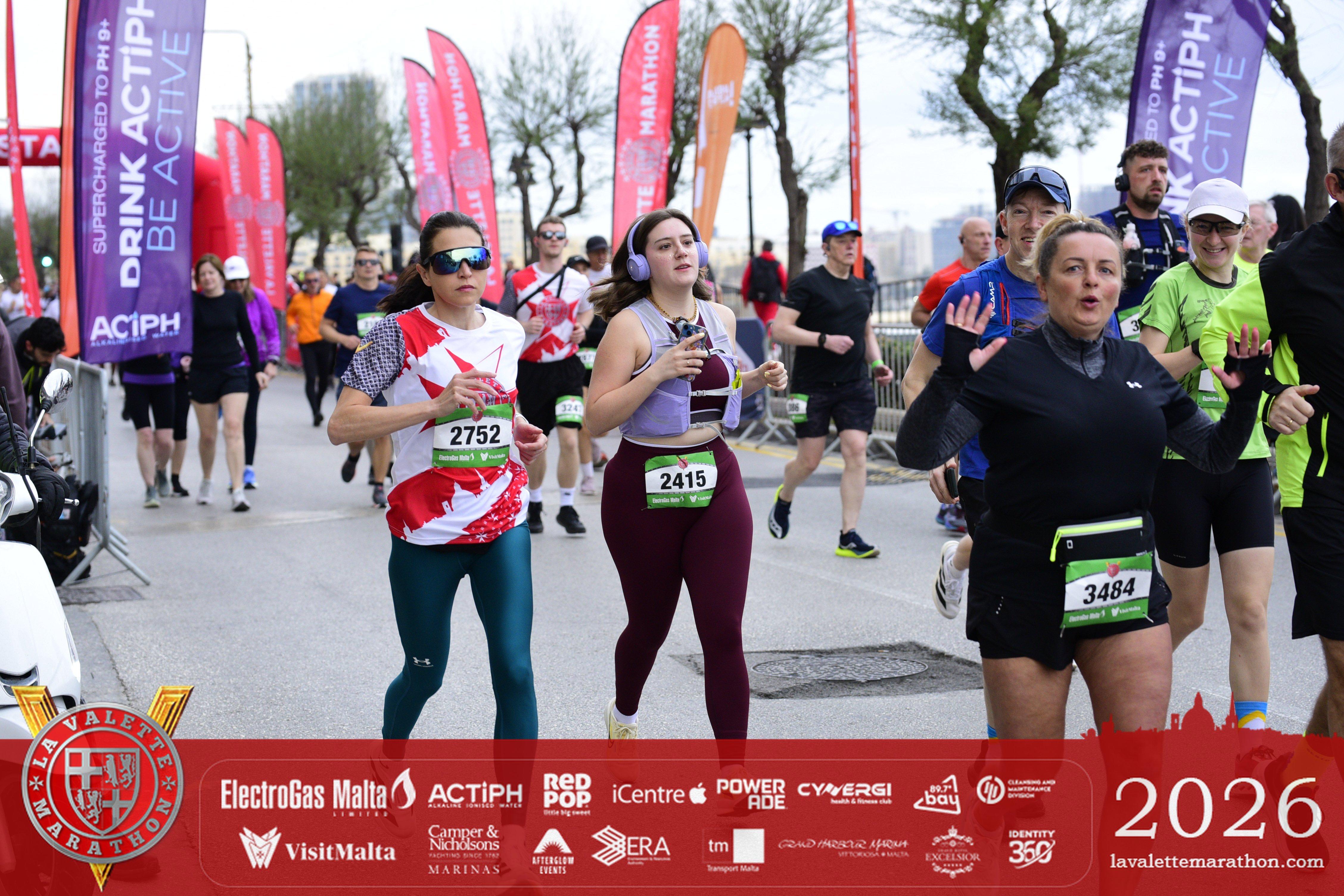
The Numbers Don't Lie
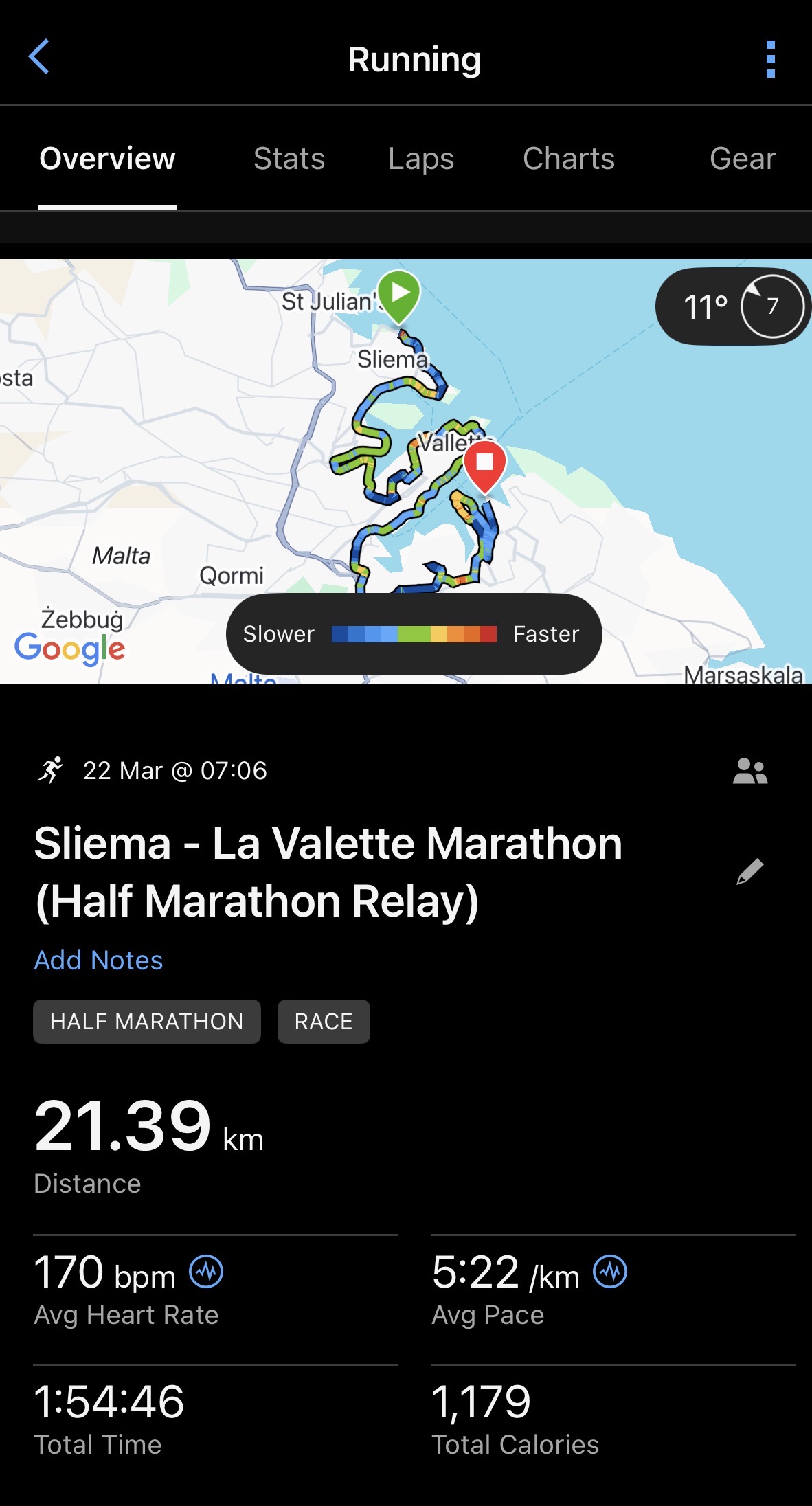
21.39 km. Not 21.1 — almost 300 metres longer than an actual half marathon. Thanks for that, course designers. 1:54:46. Average pace 5:22/km. Average heart rate 170 bpm. 1,179 calories burned.
Those numbers are slower than anything I've run in a half marathon. And I'm putting them here anyway, because this is what an honest race looks like. Not every race is a PB. Not every finish line feels like a victory. Sometimes you cross the line and the first thing you feel is disappointment, and that's real, and you're allowed to sit with it.
What I'm Taking From This
I'm not going to wrap this up with some motivational quote about how "showing up is winning." Dai, I showed up. I know I showed up. But I also know I could have been better prepared if life hadn't thrown everything at me at once — and if I'd been smarter about the things I could control.
The diet. I could have controlled that. The long runs I skipped after the asthma cleared — I could have forced those back in, even shorter. The hill training I never did because Sliema is flat and comfortable — that one stings the most.
So here's the honest truth: I'm disappointed. And I'm also already thinking about the next one. Because 1:54:46 isn't my time. It's just the time I got on a day when nothing lined up. The real time is still out there, and I'll find it.
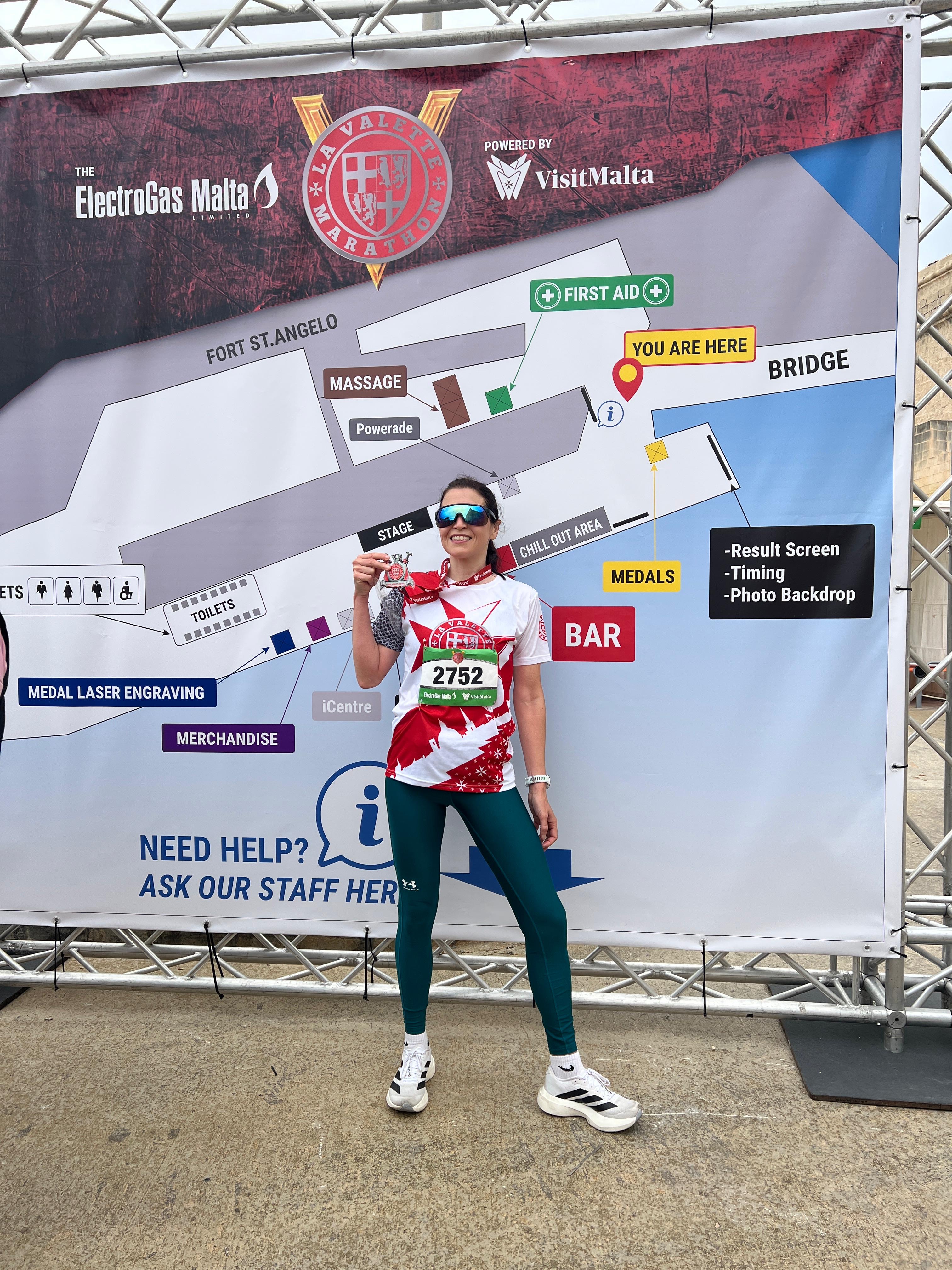
If you want to see what a good race day looks like on this island, read about running the M2S from Mdina to Spinola — same coastline, very different story.
Anyone else raced La Valette this year? How did the hills treat you? I want to hear it — especially if you also underestimated that Vittoriosa climb.